Basic Immunology Abbas 4th Edition
Basic Immunology: Functions and Disorders of the Immune System With Student Consult Online Access by Abul K. Abbas MBBS, Andrew H. Lichtman MD PhD, Shiv Pillai MD. [ Edition: fourth ]. Good Condition. Resources, you can find basic immunology abbas lichtman 4th edition or just about any type of ebooks, for any type of product. Best of all, they are entirely free to find, use and download, so there is no cost or stress at all.
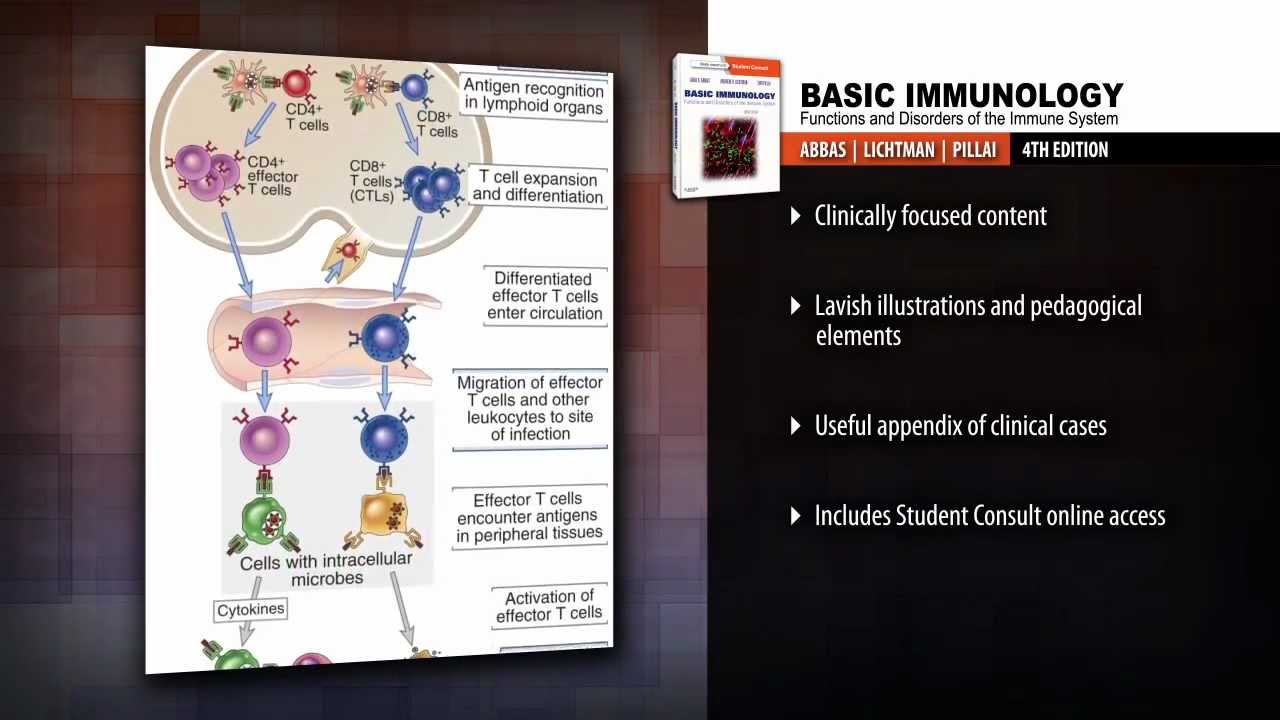

Basic immunology Lecture 9. Innate immunity: inflammation, leukocyte migration. Kuby Immunology 4th Edition, 2000. • Different levels of the immune response. Abbas, Lichtman, Pillai: Cellular and Molecular Immunology 7th Edition, 2012. Test Bank for Basic Immunology: Functions and Disorders of the Immune System, 4th Edition by Abul K. Table of Contents. Introduction to the Immune System. Innate Immunity. Antigen Capture and Presentations to Lymphocytes. Antigen Recognition in the Adaptive Immune System. Cell-Mediated Immune Responses. The fifth edition of Basic Immunology has been revised to include recent important advances in our understanding of the immune system and to organize and present information in order to maximize its usefulness to students and teachers.
Having already produced a now classic immunology textbook (1), Abbas and Lichtman have done another good job in preparing this book primarily for students and others with little or no background in immunology. It will also serve researchers with little training in immunology well. Today's immunology, at its current level of complexity, could not be put into 232 pages of text in a more comprehensive, yet accessible, way. The plain language, coupled with the unintimidating size of the book, relieves the apprehensive reader at the outset. Abundant diagrams, figures, charts, and tables make it easier to follow the subject. A majority of these are in color. Even the text is frequently decorated with sections in boldface type to emphasize key concepts so that by just skimming through the pages and reading only those highlighted sections one can get a quick sense of basic immunology in minutes. But there is more. Each chapter is summarized in bullet form with accompanying review questions. The book ends with a list of suggested readings (carefully selected except for the reference to the 1993 map of the human major histocompatibility complex (MHC) which is now updated by the report of the MHC Sequencing Consortium in Nature, 1999;401:921) and three appendices containing 1) a list of known CD molecules, 2) a 24-page glossary, and 3) five clinical cases with questions and answers. The index is rather comprehensive as well. Nothing in this book seems to have been done just for the sake of it, and the precious whole is presented as a handy package.
The book consists of 12 chapters, which cover almost every topic found in larger classic textbooks. The first chapter introduces the immune system, with photographs of cells and organs of the immune system, beautiful drawings, graphs, and tables. Anybody who finds the current field incomprehensible should study this chapter; it is bound to leave the reader with a full appreciation of modern immunology. The next chapter moves on to a subject fast gaining interest: innate immunity. These 18 pages introduce the reader to the cells of the innate immune system, chemokines, cytokines, and complement molecules as well as clinical disorders arising from defects in each of these. The latest developments in the fast-growing area of natural killer cell biology is treated more superficially, perhaps on purpose, because the topic is difficult to comprehend in a textbook of this scope, and the more curious reader must turn to journal articles for the latest information about natural killer receptors and functions. The next six chapters cover adaptive immunity: antigen presentation, antigen recognition, and cell-mediated and humoral immune responses. In these chapters, the authors are fluid and effective in describing immunologic phenomena, such as antigen processing and presentation, T-cell receptor and immunoglobulin gene rearrangements, and immunoglobulin class switching. The remaining chapters cover tolerance and autoimmunity, cancer and transplant immunology, and hypersensitivity and immunodeficiencies. This section achieves an especially fine balance between basic and clinical immunology. Throughout the book, the biochemical foundations are presented in sufficient detail and plain language. The authors take every opportunity to supply the logic behind some names or abbreviations and to clarify misconceptions about them. They do it, for example, for the reticuloendothelial system, the tumor necrosis factor, the Fc portion of the immunoglobulin molecule, interleukin, interferon, complement, and caspase, but there are occasional lapses, as with the ζ chain of the T-cell receptor, which is simply listed even in the glossary as ζ (under Z) rather than “zeta.” The only factual error I noted was in the last paragraph of the book, where Kaposi's sarcoma is linked to HHV6 rather than HHV8.
Future editions might include a chapter or an appendix on immunologic methods. Brief explanation and illustration of key bench procedures would complete the splendid “grand tour” of the immunologic world. Although certainly not an imperfection for this book, the cursory coverage of immunogenetics would force a molecular epidemiologist looking for something more substantial to search elsewhere. However, an accessible synthesis of immunology and genetics is rare in other general texts as well. Download software alat musik pc games. Future editions may need to devote more space to immunogenetics.
Overall this book is very well written and attractively illustrated. For those who aim to review and/or update basic immunology without being overwhelmed, it is strongly recommended. It ranks with other introductory works (e.g. Lecture Notes on Immunology by Reeves and Todd (2) and The Immune System by Parham (3)). For a reader ready to take the next step, there is Kuby's Immunology (4) and the 2001 edition of Immunobiology by Janeway et al. (5). No matter which textbook is selected, because of the accelerated pace of discovery in biomedical science and in immunology, in particular, the inevitable concern arises over when another useful volume might appear. In this case, a reader in need of basic knowledge can unhesitatingly choose the current edition of Basic Immunology and eagerly await the next.
References
Basic Immunology Abbas Free Download
In this updated edition of Basic Immunology, the authors continue to deliver a clear, modern introduction to immunology, making this the obvious choice for today's busy students. Their experience as teachers, course directors, and lecturers helps them to distill the core information required to understand this complex field. Through the use of high-quality illustrations, relevant clinical cases, and concise, focused text, it's a perfectly accessible introduction to the workings of the human immune system, with an emphasis on clinical relevance.
Basic Immunology Abbas 4th Edition 2016
- Concise, clinically focused content is logically organized by mechanism for efficient mastery of the material.
- Features an appendix of clinical cases and CD molecules.
- Includes numerous full-color illustrations, useful tables, and chapter outlines.
- Focus questions within each chapter are ideal for self-assessment and review.
- Key points bolded throughout the text make it easy to locate important information.
- Presents information in a format and style that maximizes usefulness to students and teachers studying medicine, allied health fields, and biology.
- Fully updated content equips you with the latest relevant advances in immunology.
- Revised and updated artwork enhances your visual learning of important principles and reduces the excessive factual details found in larger textbooks.
- Twelve brand-new animations available on Student Consult help further explain complex concepts.
- Student Consult eBook version included with purchase. This enhanced eBook experience gives you access to the text, figures, images, glossary of immunology terms, self-assessment questions, and references on a variety of devices.
'synopsis' may belong to another edition of this title.